

- Help Desk Channels, SLAs, and Communication Protocols
- Account Security, Identity Verification, and 2FA Reset Protocols
- Technical Troubleshooting: Submitting an Audit Ticket to BC.Game support
- Ticket Escalation Levels and Evidence Retention Controls
- Blockchain Transaction Verification and Financial Dispute Management
- Regional Technical Compliance and Frequently Asked Questions (FAQ)
The platform then directs it to live chat, email review or the API Desk, depending on the evidence and specialist access required. Straightforward interface questions can be resolved quickly, while blockchain or ownership disputes need a longer record of logs, timestamps and verification steps.
BC.Game is operated by Twocent Technology Limited, a limited liability company registered in Belize under number 000041939, at Sea Urchin Street, San Pedro, Ambergris Caye, Belize. It operates under Anjouan licence ALSI-202410011-FI1 and may include Curaçao licensing references in contractual materials. These arrangements do not authorize online gambling in Indonesia.
Indonesian users must independently assess whether accessing the service is lawful in their location. Technical support also cannot guarantee a refund, balance correction or favourable betting result. It can inspect evidence and explain a decision, but it cannot reverse a confirmed external transfer, alter blockchain finality or promise that a wager will produce a financial return.

Last used 6 minutes ago
Help Desk Channels, SLAs, and Communication Protocols
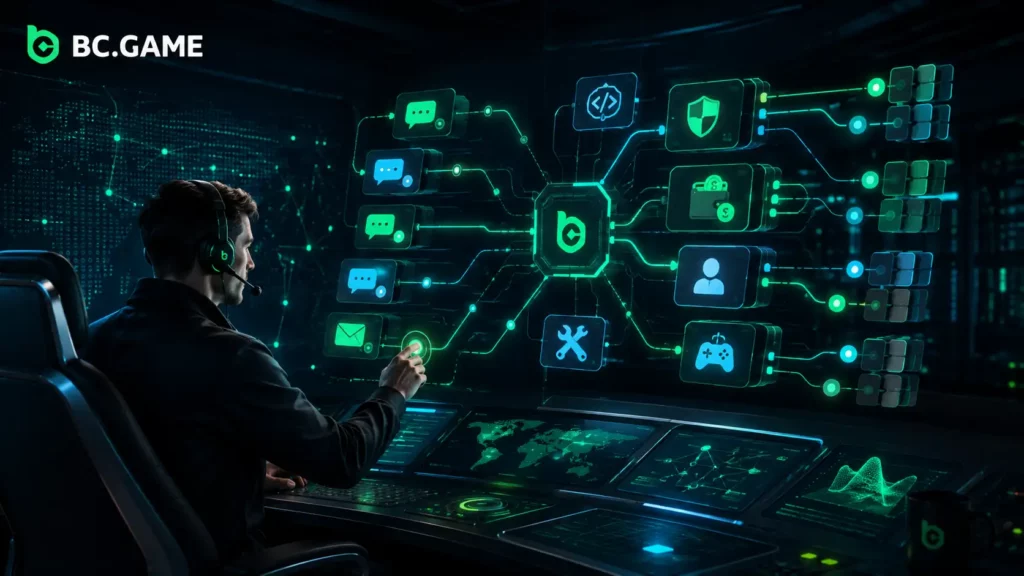
The BC Game support architecture separates live conversations, asynchronous investigations and integration errors. Live chat handles immediate account or interface questions. Email ticketing preserves evidence for cases requiring manual log inspection. The API Desk reviews endpoint responses, authentication failures, rejected payloads and other integration-level incidents.
Requests enter one of these support categories:
- Financial Transactions: Delayed deposits, withdrawals, network confirmations and balance records.
- Security Incidents: Lost 2FA access, suspicious sessions and unauthorized activity.
- Account Initialization: Registration, verification and first-login failures.
- Technical Errors: Browser, interface, application and API problems.
- Game Session Review: Frozen rounds, provider errors and disputed settlements.
The category determines routing rather than the outcome. A financial label may send the request to a ledger specialist, but it does not automatically produce a balance adjustment.
Live Chat Routing Algorithms and Queue Prioritization
Smart routing oracles assess the selected subject, language, account state and active workload. The session is then assigned to an available queue. Security incidents and confirmed financial mismatches receive priority over general navigation questions.
Users can help the routing system by following these communication protocols:
- describe only one incident in each ticket;
- provide the exact timestamp and time zone;
- retain the original Ticket ID and User ID;
- identify the asset, network and TxID where relevant;
- continue the existing case instead of creating duplicates.
Indonesian users should specify WIB, WITA, WIT or UTC. A missing time zone can prevent an agent from locating the correct transaction or login event.
Asynchronous Email Ticketing and Complex Dispute Resolution
Email review is used when an agent needs attachments, historical records or specialist access. Typical cases include 2FA recovery, a confirmed transfer missing from the account ledger or a game round requiring provider-side analysis. The API Desk follows a similar evidence model but focuses on request methods, endpoint errors and payload validation.
Screenshots should show the error, timestamp and relevant identifier without exposing a password, seed phrase, private key, backup code or current TOTP value.
Table 1: Support Channel SLA & Latency Specifications
| Support Channel | Operating Model | Average First Response Time (SLA) | Target Resolution Window | Escalation Protocol |
| In-App Live Chat | 24/7/365 Automated Routing | < 60 Seconds | 5–15 Minutes | Tier-2 Senior Agent Shift |
| Email Help Desk | Asynchronous Queue | < 2 Hours | 12–24 Hours | Technical Lead Review |
| VIP Account Desk | Dedicated Account Nodes | Instant / Priority | Custom SLA Scope | Executive Audit Team |
These values are service targets. External network delays, identity checks or provider audits can extend the final resolution window.
Last used 6 minutes ago
Account Security, Identity Verification, and 2FA Reset Protocols

BC.Game recommends protecting an account with Two-Factor Authentication through Google Authenticator. When access to the authenticator is lost, recovery requires evidence that distinguishes the owner from an unauthorized requester.
The security verification layers are:
- Cryptographic Signature Proof: A signed message created with a previously registered wallet.
- Time-based One-Time Password Audit: A controlled TOTP reset requiring additional confirmation.
- Historical Transaction Matching: Comparison of supplied TxIDs with earlier account activity.
- Device Fingerprint Authentication: Review of known IP ranges, devices and session markers.
A cryptographic signature is generated locally. Support does not need the wallet’s private key or seed phrase, and neither should ever be disclosed.
Account recovery may depend on these parameters:
- registered email address or User ID;
- approximate account-creation date;
- known device and historical login location;
- previous deposit or withdrawal TxIDs;
- timestamp of the access failure;
- verified contact channel.
No single screenshot should be treated as complete ownership proof. Several matching records create a stronger audit trail and reduce the risk of an unauthorized reset.
Table 2: Technical Support Routing Matrix
| Incident Classification | Primary Input Channel | System Logs Inspected | Resolution Output |
| 2FA Reset Request | Email Desk (Encrypted) | Login Records, Hash History | Automated Re-authentication Key |
| Deposit Confirmation Delay | Live Chat / Ticket Desk | Blockchain Ledger & Node Status | Manual Balance Index Sync |
| Game Session Freeze | Live Chat | Provider Server Logs & Game Seed | Round Cancellation / Balance Reset |
The listed output is available only after verification. A support request does not guarantee round cancellation, reimbursement or modification of the account balance.









Technical Troubleshooting: Submitting an Audit Ticket to BC.Game support
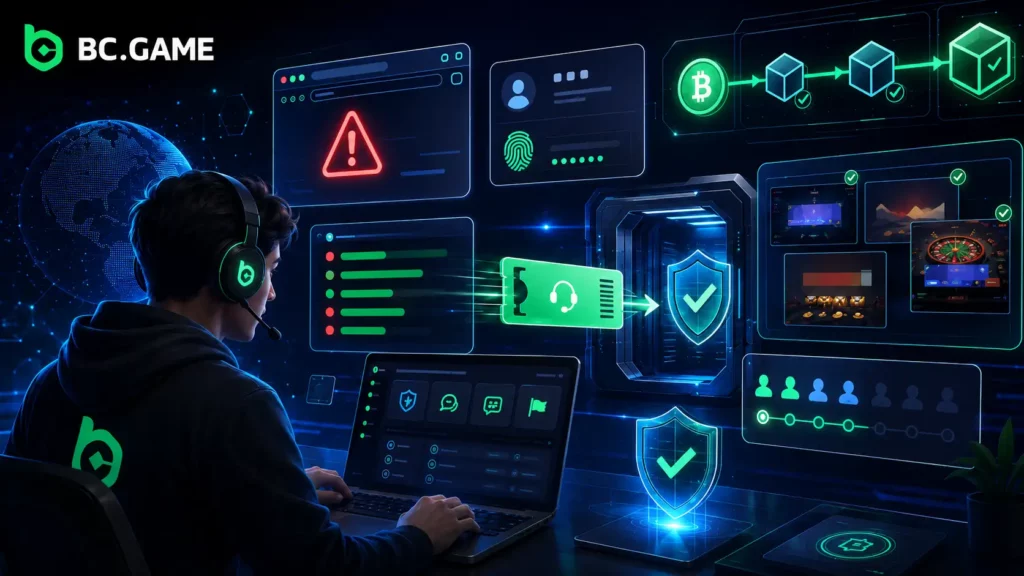
A useful audit ticket is short but specific. Browser cases should identify the operating system, browser version, Session ID and exact error. Cryptocurrency cases need the original asset amount, network, TxID, receiving address and timestamp; an approximate value in IDR is secondary.
The Support Ticket Generation and Identity Verification protocol follows four stages:
- Session Authentication and Log Collection: Identify the issue and capture Browser Console Logs, Session ID and TxID where applicable.
- Support Portal Engagement: Open the support interface through the encrypted platform dashboard and select the appropriate issue node.
- Data Payload Submission: Send precise metadata, relevant screenshots and a comparison of the expected and observed result.
- Queue Tracking and Verification: Retain the Ticket ID and monitor the encrypted status console until resolution confirmation.
Every screenshot should be checked before submission. Authentication codes and wallet secrets must be removed, while timestamps, error messages and network names should remain legible.
Last used 6 minutes ago
Ticket Escalation Levels and Evidence Retention Controls
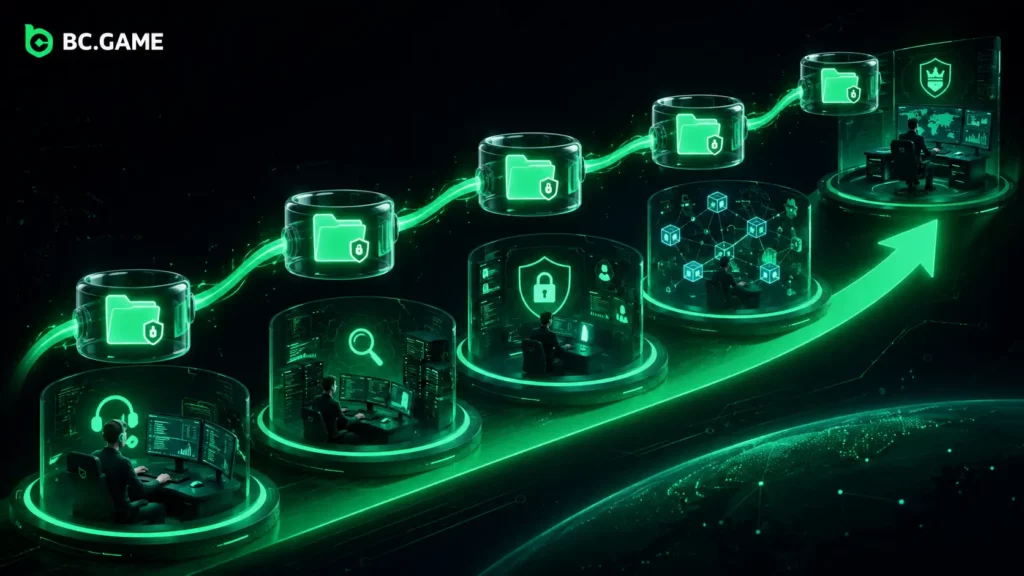
Escalation preserves the existing evidence while moving the incident to a team with broader technical access. It should normally continue under the original Ticket ID.
The escalation sequence includes:
- Tier 1: Initial classification and basic account checks.
- Tier 2: Review of technical logs and transaction records.
- Security Review: Ownership checks and suspicious-session analysis.
- Provider or Network Review: External game-server or blockchain investigation.
- Senior Management Review: Final assessment of a documented unresolved dispute.
Opening duplicate cases can divide the evidence among separate queues. A user requesting senior review should provide the original Ticket ID and registered UID.
Blockchain Transaction Verification and Financial Dispute Management
A delayed crypto deposit may be absent from the network, waiting in the mempool, included in a block or confirmed but missing from the internal ledger. Support compares public-chain evidence with the account record before choosing a resolution route.
Bitcoin review focuses on the TxID, mempool status and block depth. Ethereum cases add gas execution, token contract and internal-transfer logs. TRON requires transaction status and energy data. Polygon disputes need the Polygon TxID, token contract and destination address.
Table 3: Cryptographic & Financial Audit Specifications
| Network Protocol | Verification Metric | Support Required Parameter | Resolution Standard |
| Bitcoin / Lightning | Block Depth / Mempool Status | Native Transaction Hash (TxID) | Node Resync / Manual Confirmation |
| TRON (TRC-20) | Energy Consumption / Tx Status | Sender / Receiver Public Key | Contract Audit Verification |
| Ethereum (ERC-20) | Internal Transfer / Gas Execution | Etherscan Transaction Log | Internal Balance Re-indexing |
A successful explorer record confirms network processing, but it does not prove that the correct asset, contract or deposit network was used. The original crypto amount is therefore more useful than its changing IDR equivalent.