

- Corporate Structure, Regulatory Licensing, and Jurisdictional Framework
- Cryptographic Transparency: Provably Fair Algorithm and SHA-256 Hash Verification
- Technical Protocol: How Users Independently Verify Game Fairness
- Financial Solvency, Cold Storage Architecture, and Withdrawal Integrity
- Security Controls, AML/KYC Triggers, and Indonesian Legal Boundaries
- Regional Compliance Standards and Frequently Asked Questions (FAQ)
BC.Game states that it uses Provably Fair systems and audited RNG; compatible games rely on a Server Seed, Client Seed, Nonce, and game-specific calculation. These mechanisms allow selected outcomes to be inspected, but they do not prove solvency or guarantee withdrawals. No current smart-contract audit report, named auditor, contract address, or public 1:1 reserve attestation was identified on the reviewed BC.Game pages. Digital assets also carry price, address, network, and custody risks. Twocent Technology Limited operates the platform under its published Anjouan framework, but online gambling is prohibited in Indonesia. Indonesian users remain responsible for local-law compliance and genuine information during identity or financial reviews.
Corporate Structure, Regulatory Licensing, and Jurisdictional Framework

The review begins with BC.Game’s disclosures. Its Terms and AML page name Twocent Technology Limited and Belize registration number 000041939. The current licence page identifies the Government of the Autonomous Island of Anjouan and ALSI-202410011-FI1. That is the licence directly supported by current BC.Game material.
Entity Registration and Licensing Compliance
A company number identifies the operator; a gaming licence records authorisation within the issuing jurisdiction. Neither creates an Indonesian licence. Older material may contain Curaçao references, but the current BC.Game licence page names Anjouan. Curaçao should not be presented as a simultaneous current authorisation without a new verifiable record.
The source hierarchy used for the corporate assessment is:
- the current BC.Game Terms of Service, which identify the operator;
- the BC.Game AML Policy, which repeats the corporate disclosure and compliance framework;
- the BC.Game licence page, which publishes ALSI-202410011-FI1;
- the BC.Game login guide, which describes account access and recommends 2FA;
- BC.Game’s forum and blog material concerning the iTech Labs RNG evaluation.
This order separates current legal disclosures from older educational content. A blog post cannot replace a live licence entry or a present-day reserve audit.
Third-Party Operational Audits and Anti-Fraud Frameworks
BC.Game’s forum reported in 2019 that iTech Labs evaluated its RNG, and a later BC.Game blog article said the algorithm met the relevant randomness standards. This is a dated RNG claim, not permanent certification of every later game, wallet, or release. No reviewed BC.Game page supplied a current Crypto Gambling Foundation certificate or reproducible smart-contract audit.
Table 1: Licensing & Corporate Entity Specifications
| Corporate Parameter | Institutional Detail | Regulatory / Audit Body | Verification Status |
| Operating Entity | Twocent Technology Limited; Belize No. 000041939 | BC.Game Terms and AML Policy | Published by BC.Game |
| Current Licence Authority | Autonomous Island of Anjouan | Government of Anjouan | ALSI-202410011-FI1 published by BC.Game |
| RNG Evaluation | BC.Game RNG assessment | iTech Labs | Historical certificate referenced by BC.Game |
The table records current BC.Game disclosures and a date-sensitive audit claim. Both should be checked again when the article is updated.









Last used 6 minutes ago
Cryptographic Transparency: Provably Fair Algorithm and SHA-256 Hash Verification
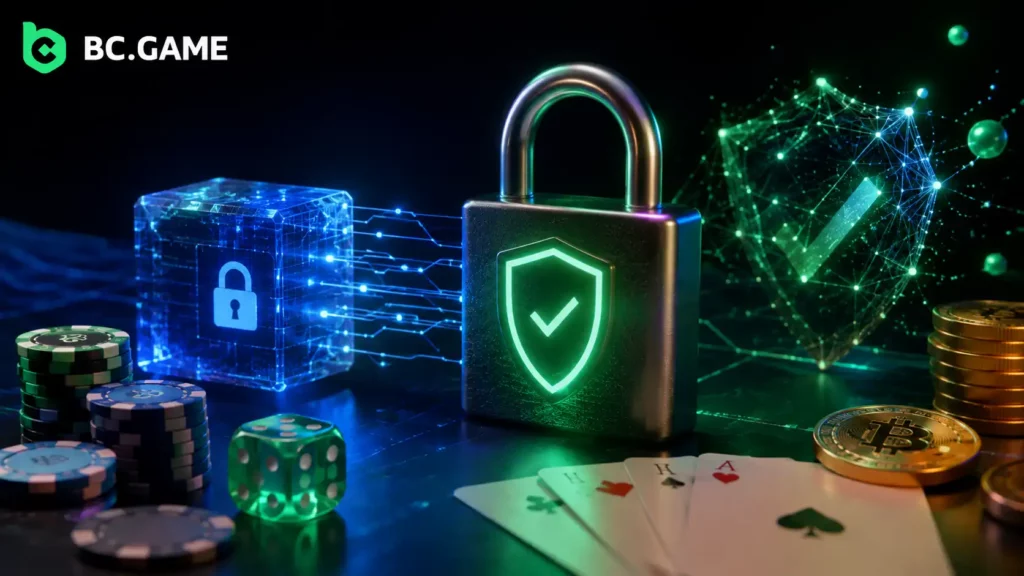
BC.Game describes its betting environment as protected by Provably Fair systems and audited RNG. For a BC Game scam inquiry, the distinction is between an operator statement and a reproducible result. Compatible Originals expose verification inputs; third-party games may use provider-controlled RNG and separate certification.
The cryptographic components required for a player-side check are:
- Server Seed commitment: the hidden Server Seed is represented by a hash before its raw value is disclosed;
- Client Seed: a user-selected or generated value forms part of the result input;
- Nonce: the counter identifies successive bets made with the same seed pair;
- HMAC-SHA256 calculation: the seeds and correctly formatted round data produce a deterministic hexadecimal output;
- game-specific mapping: published logic converts the output into the final number, cards, mine positions, or multiplier.
The Server Seed hash is a commitment, not reversible encryption. Once the raw seed is revealed, its SHA-256 value can be compared with the saved commitment. The final result also requires that game’s exact HMAC format and conversion code.
Table 2: Provably Fair SHA-256 Verification Protocol Metrics
| Data Parameter | Calculation Formula / Protocol | System State | Public Auditability |
| Pre-Round Commitment | SHA-256 of the raw Server Seed | Hash shown; raw seed hidden | Commitment can be recorded before play |
| Outcome Calculation | Game-specific HMAC-SHA256 input using Server Seed, Client Seed, and Nonce | Deterministic computation | Reproducible after seed disclosure |
| Post-Cycle Disclosure | Raw Server Seed revealed and hashed again | Disclosed, not decrypted | Earlier commitment can be compared |
This check tests whether saved inputs reproduce the outcome. It does not audit reserves, withdrawals, or games without the same verification data.
Last used 6 minutes ago
Technical Protocol: How Users Independently Verify Game Fairness
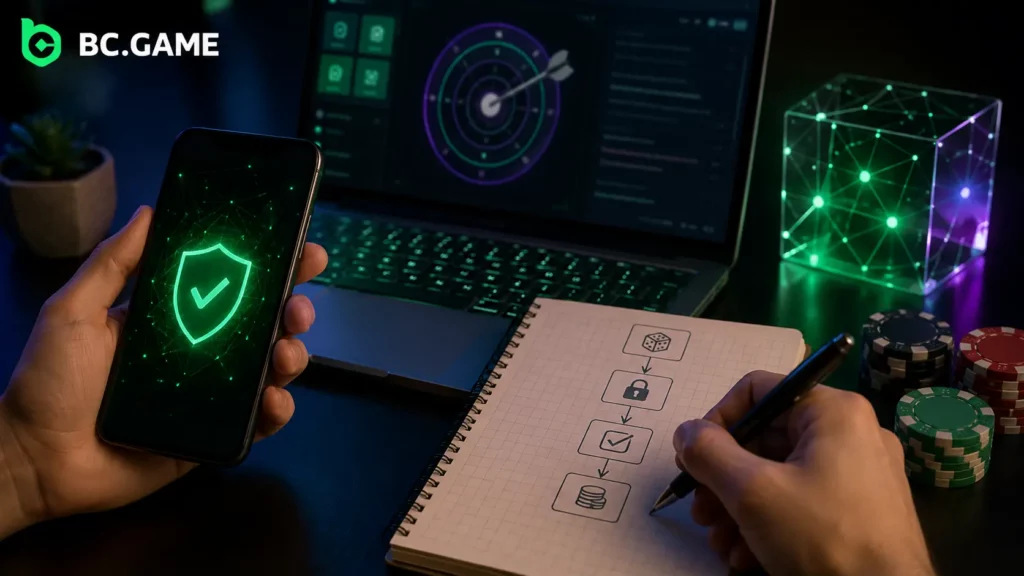
Verification should begin with the completed wager, not with an unrelated online calculator. A SHA-256 calculator can confirm the Server Seed commitment, but the final result also depends on HMAC formatting and the game’s conversion formula. The execution protocol is:
- Seed Metadata Collection: Record the Server Seed Hash, Client Seed, Nonce, bet identifier, game name, and any additional round value displayed by BC.Game.
- Post-Game Seed Unveiling: Rotate or replace the active seed when required and obtain the raw Server Seed released for the completed seed cycle.
- HMAC-SHA256 Computation Execution: Calculate SHA-256 of the disclosed Server Seed, compare it with the stored commitment, and then run the inputs through the formula published for that game.
- Hash Matching and Result Validation: Convert the resulting hexadecimal data as specified and compare the reconstructed number, layout, or multiplier with BC.Game’s settled bet record.
A successful comparison demonstrates consistency between the saved inputs and the recorded result. It does not establish that a betting strategy is profitable or that an Indonesian resident is legally permitted to use the service.
Last used 6 minutes ago
Financial Solvency, Cold Storage Architecture, and Withdrawal Integrity
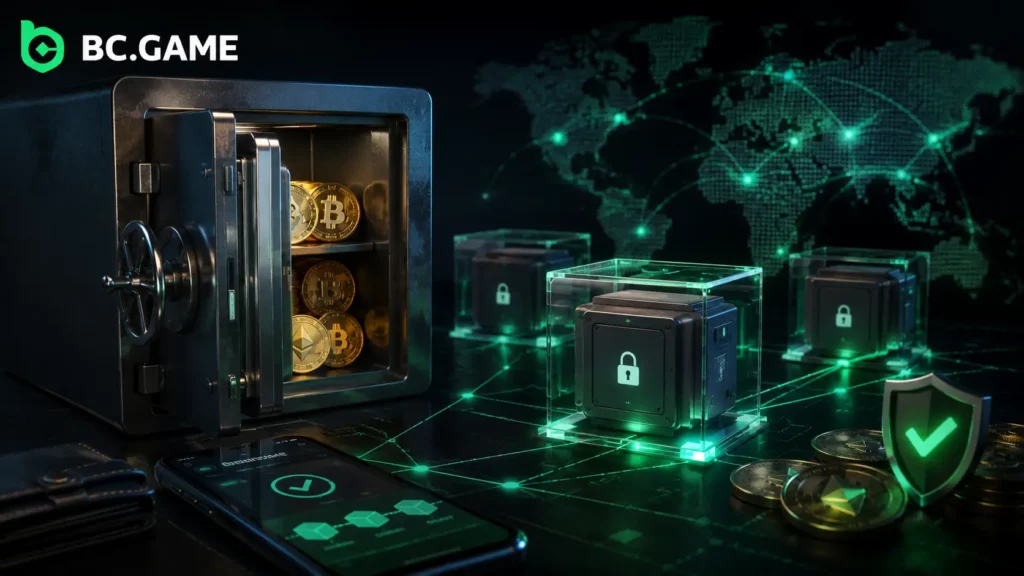
BC.Game markets fast withdrawals and low fees, but those statements are not a reserve audit. Solvency evidence must cover assets and liabilities at a defined time. The reviewed pages did not publish a wallet list, liability tree, current attestation, documented 1:1 result, or the proportion held in multisignature cold wallets.
Blockchain visibility begins after broadcast. A TxID can show addresses, asset, amount, network status, and confirmations. Before broadcast, authentication, AML/KYC, processing, or risk review may apply. Network traffic and fees can then affect timing, while an IDR display may change with the underlying asset.
Table 3: Security & Liquidity Compliance Specifications
| Security Layer | Technical Architecture | Operational Safeguard | Risk Mitigation Output |
| Account Authentication | Password plus optional Google Authenticator 2FA | BC.Game recommends enabling 2FA | Adds a second factor when activated |
| Transaction Verification | Public blockchain record after broadcast | TxID, network, address, and confirmation checks | Supports independent transaction tracking |
| Asset Custody | Detailed hot/cold and multisignature allocation not published on reviewed BC.Game pages | No current BC.Game reserve attestation identified | Solvency cannot be independently guaranteed |
Missing public reserve evidence does not prove insolvency, but it prevents an independent conclusion about 1:1 coverage, custody allocation, or guaranteed withdrawal capacity.
Last used 6 minutes ago
Security Controls, AML/KYC Triggers, and Indonesian Legal Boundaries
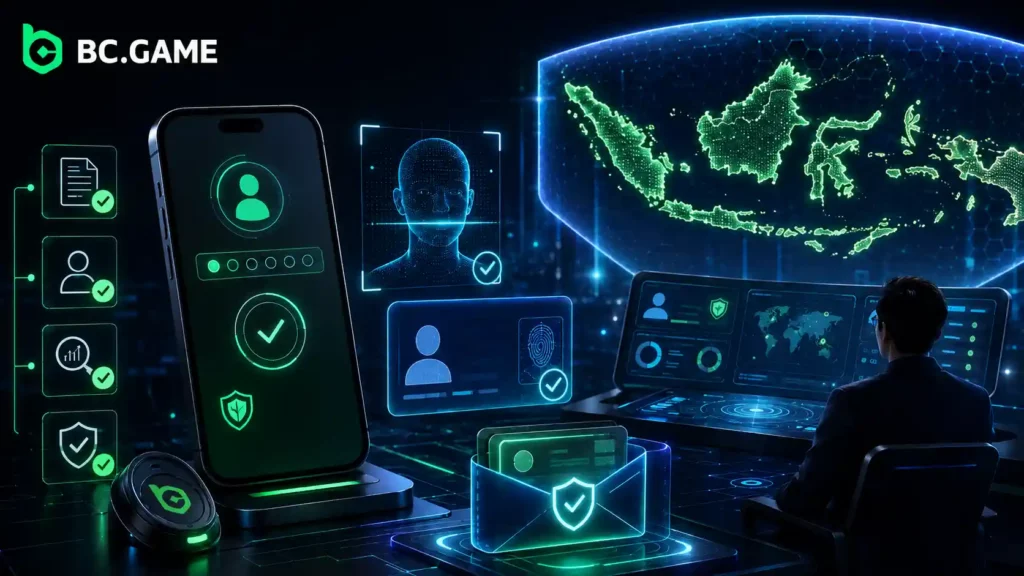
BC.Game’s login guide recommends Two-Factor Authentication and links to its Google Authenticator instructions. It recommends 2FA; the reviewed page does not call it mandatory for every account. Practical security layers include:
- a password that is unique to the BC.Game account;
- Google Authenticator enabled before funds are stored or transferred;
- recovery information kept offline and separate from the logged-in device;
- linked email and external wallet accounts protected independently;
- wallet addresses and blockchain networks checked before confirmation.
Support should not need a password, current authenticator code, private key, or seed phrase. Such a request may target the account or wallet.
The AML and account-review indicators described or supported by BC.Game’s compliance framework include:
- identity and age information that cannot be verified;
- inconsistent account, residence, document, or payment details;
- transaction activity requiring an explanation of origin or purpose;
- funds connected with prohibited, fraudulent, or sanctioned activity;
- a request for additional KYC or Source of Funds evidence.
BC.Game does not publish its complete risk-scoring model. Users should provide unaltered documents and retain transaction details for compliance review.
For Indonesia, the legal assessment depends on the following parameters:
- online gambling is prohibited under Indonesian law;
- the Anjouan licence does not constitute Indonesian authorisation;
- an IDR interface display does not prove local regulatory approval;
- users must meet the age and identity rules stated by BC.Game;
- Provably Fair and RNG certification do not guarantee profit or payment.
Offshore licensing and technical verification are relevant evidence, but they do not override the law where the user is located.